Case 04 · Amazon Robotics · RXD
A cross-station research framework for preventing, resolving, and routing problems at the source — built across two FC sites and five station types.
Senior UX Lead — RXD (Robotics eXperience Design)
Cross-program research, product, ops
2025 — multi-quarter
Across robotic workstations, exception handling is consistently moved downstream — never resolved at the source.
Every station creates problem solve work. None of them are designed to resolve it.
Two upcoming workstation programs cannot inherit the current "figure it out" approach to exceptions.
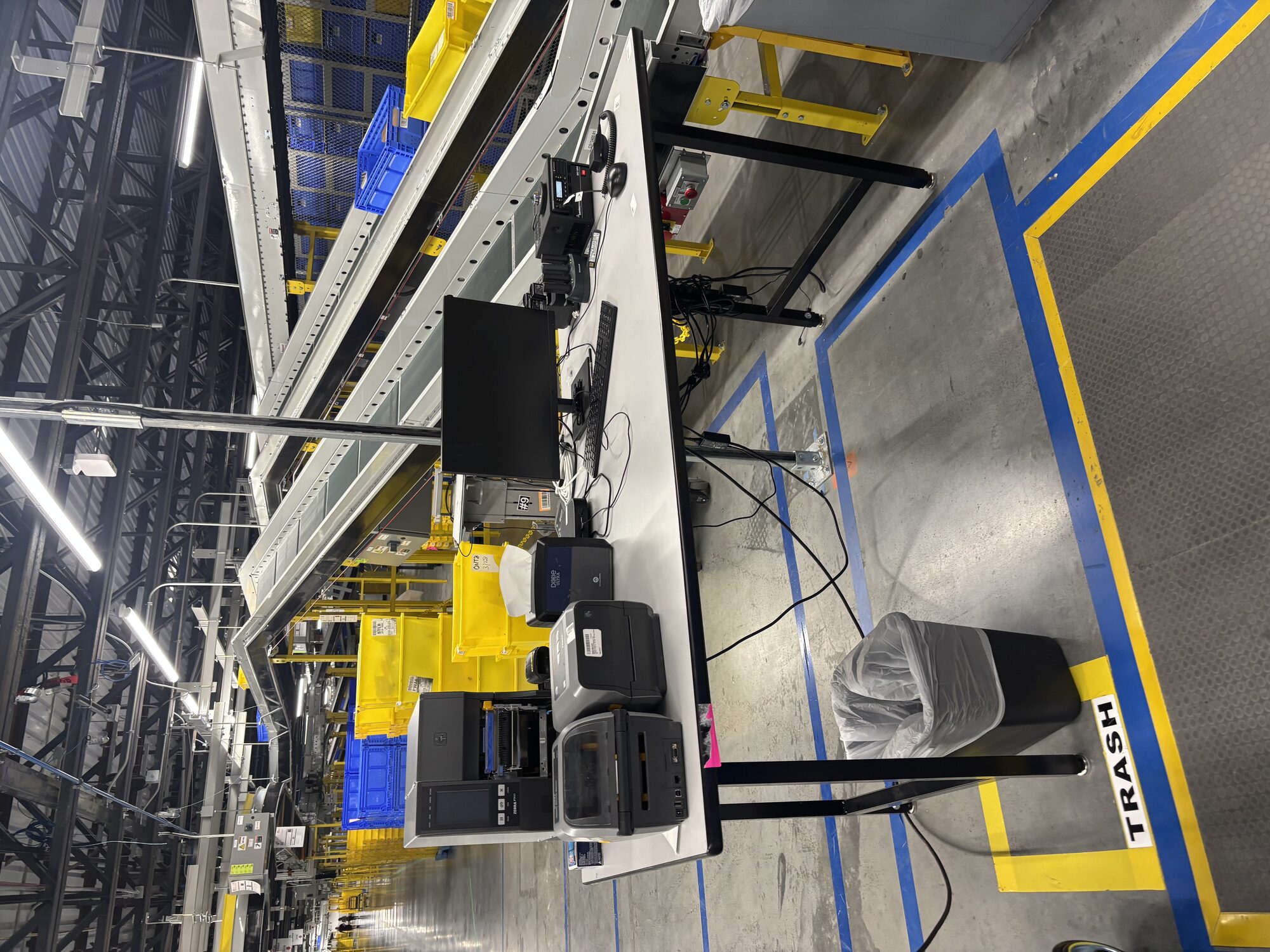
Limited footprint, no sidelining room, blocked sightlines into the work cell.
Refrigerated and chilled items cannot sit idle on the floor waiting for a waterspider — this is a food-safety issue, not just an ops inefficiency.
Problem solve is a cross-station issue; solving it station-by-station won't scale.
Blocking station entrances with sidelined items isn't an ops inefficiency — it's a safety event waiting for a regulator.
Rather than evaluate a single workstation, I built a five-stage research framework to trace problems from origin to resolution.
Scope: 5 station types · multi-site · multi-method (shadowing, real-time observation, item-journey tracing, UX evaluations).
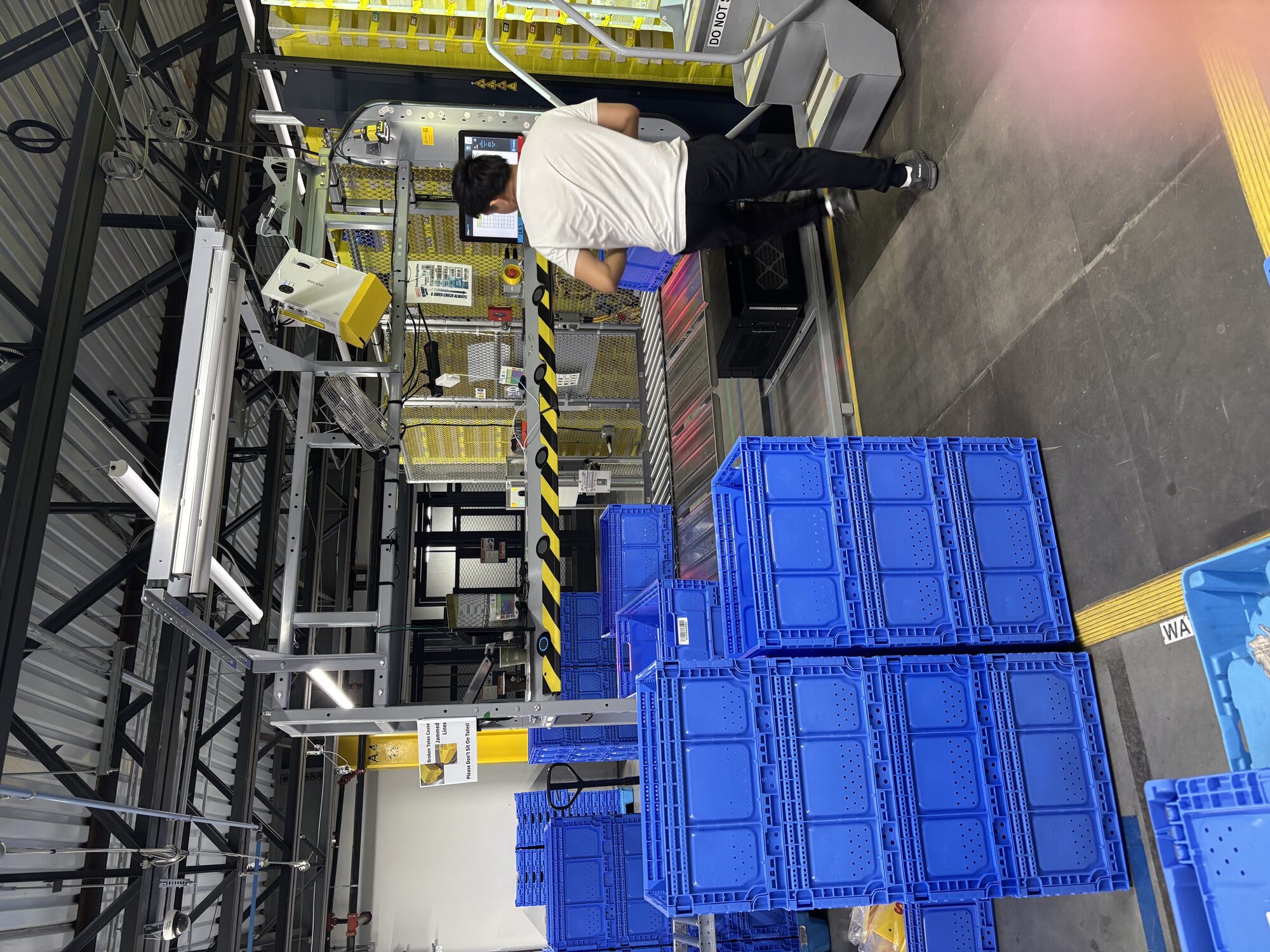
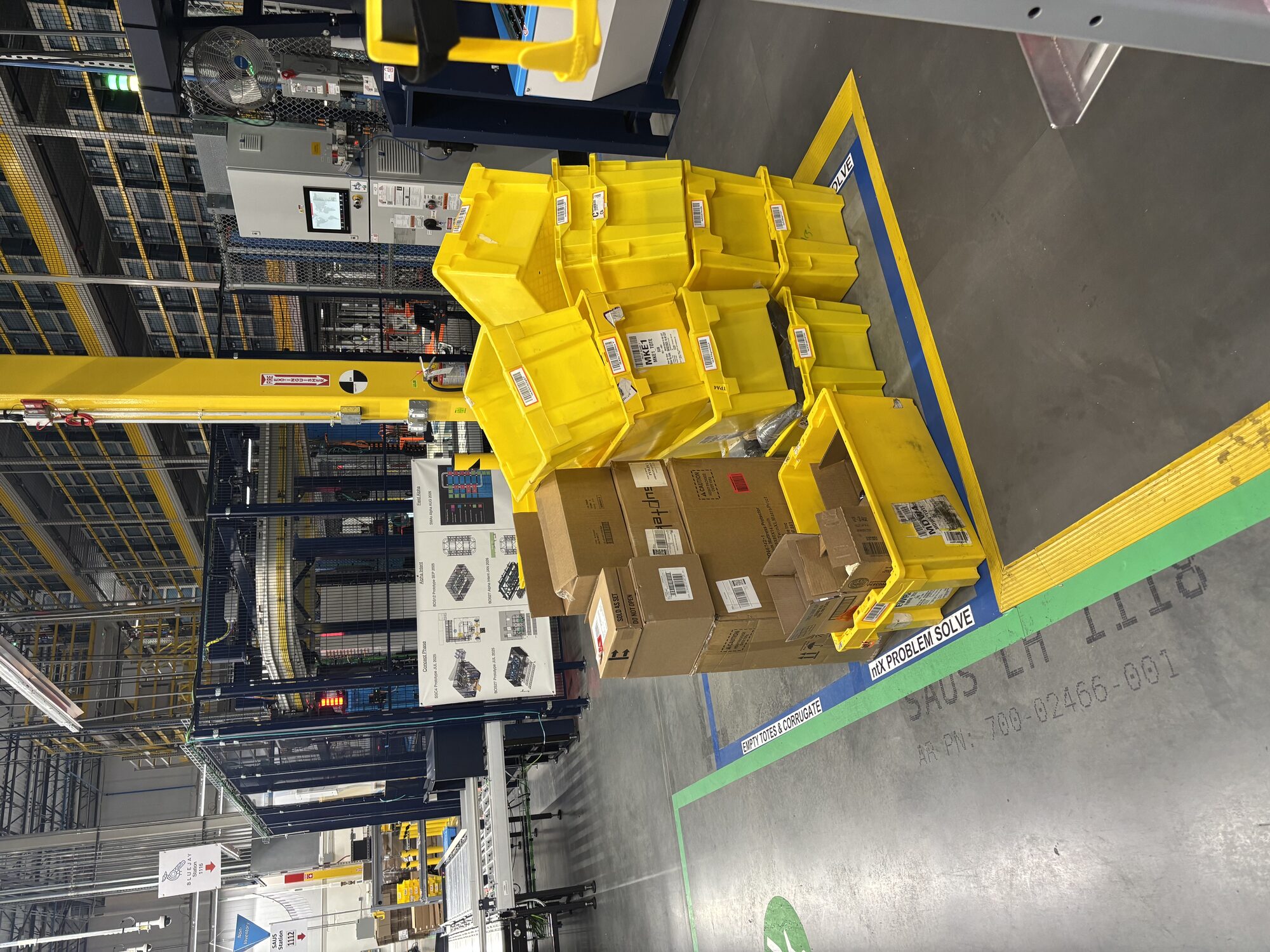
The cost of deprioritizing problem solve is visible at the station: totes accumulate faster than waterspiders can clear them, and a single PEW associate can surround their station in under thirty minutes.
Observed
25 PS totes from a single associate in 30 minutes — and 17 totes surrounding a single station at peak. The signal to clear them never reached the right person fast enough.
Four actors, multiple failure points, no one in control. I mapped every break in the handoff between operator, system, waterspider, and PS associate.
The swim lane became the team's shared artifact for understanding why station-level fixes never closed the loop — the breaks in the handoff between operator, system, waterspider, and PS associate were structural, not cosmetic.
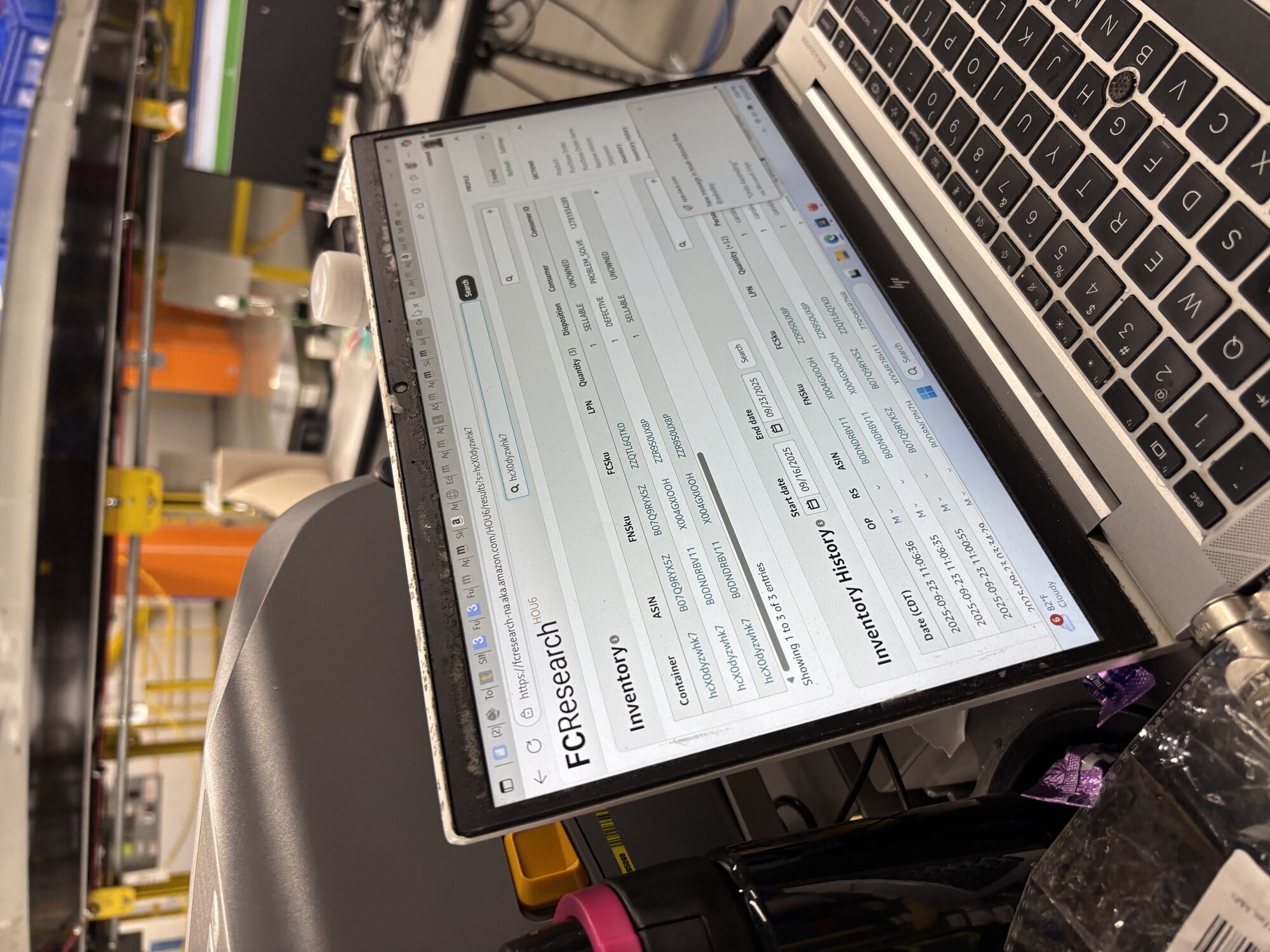
The PS associate's reality: no guided workflow, no prioritization — just tribal knowledge and six disconnected tools. Triage means stepping through up to six checks before landing on one of seven branching resolution paths.
A senior PS associate built her own Google Doc to navigate this — six years of tribal knowledge. A new hire has none of it on day one.
Before any recommendation, I filtered every problem type by whether it could be prevented, resolved at the station, routed, or only physically sidelined.
Not every problem needs a new feature. Some need prevention; some need routing; only a few need physical handling. This filter became the input to a four-tier resolution framework.
I authored a four-tier hierarchy that now guides every new workstation design — from new Pick-Pack to grocery.
Prevent
Stop the problem at the source. Enhanced multi-modal feedback, clearer scan confirmation, forced acknowledgment of failure states.
Resolve
Fix it at the station. Guided workflows for unknown items; barcode printers for unscannable items; replace catch-all sideline with structured resolution.
Route
Move it efficiently. Automated routing, consolidated PS totes (cap 1 → 11 items), batch-resolve workflows for PS associates.
Sideline
Physical handling only. Damaged or leaking containers — last resort.
The framework becomes design direction. Three of the five recommendations turned into in-flight feature work.
Multi-modal: full-screen background colour change + LED/captron lighting + auditory alert, with forced acknowledgment before the workflow advances. Existing hardware, coordinated signal.
Exception button (footer, question-mark icon) launches a step-by-step UI that guides associates through identification — opened-item vs. unopened-case branches — using existing scan-error and confirmation patterns.
Raise the per-tote cap from one item to eleven. Multi-modal PS alert (yellow background + red captron flash + auditory). Projected to eliminate 70%+ of station tote congestion.
The framework moved from a research output to an active gate on new workstation kickoffs and a roadmap for in-flight programs.
The largest outcome wasn't a UI; it was establishing that exception handling has to be designed before hardware ships — and giving teams a shared vocabulary for deciding how.
Get in touch
Currently exploring senior & staff-level UX roles in systems thinking and service design.